




Almost everyone has had this moment. You finish a meal that tasted great. Maybe it was a burger and fries, a bowl of cereal, a packet of chips or a few biscuits while watching something on your phone. You feel satisfied for a short while, and then out of nowhere the hunger returns. You start wondering what is wrong with your body. You just ate. You should feel full. You should not be thinking about another snack so soon. It feels confusing and frustrating.
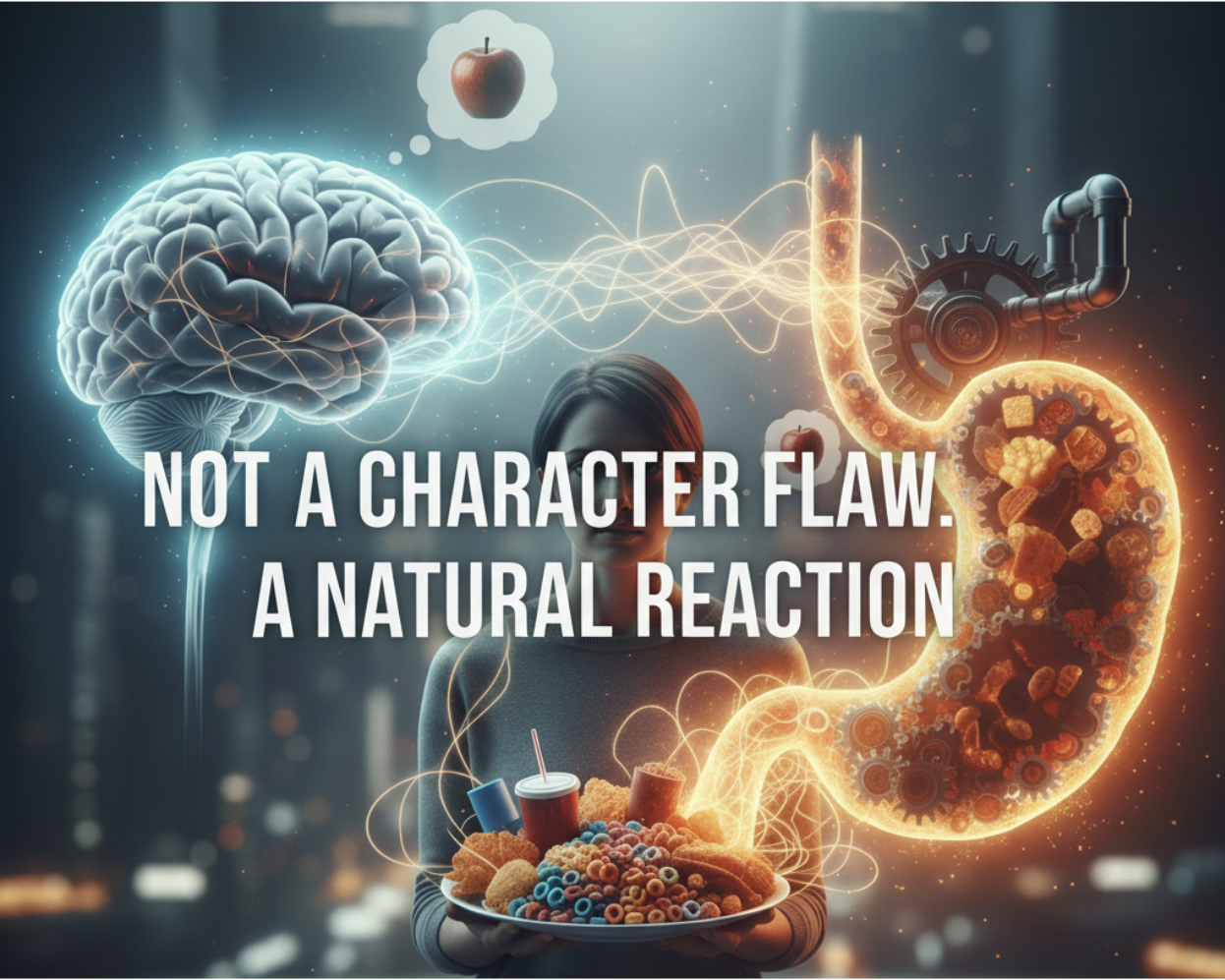
But here is the interesting part. Nothing is wrong with you. Your metabolism is not damaged, and your willpower is not weak. Your body is simply responding to foods that make it much harder for your brain and stomach to agree on when to stop eating. This is not a character flaw. It is a natural reaction to certain types of food.
A landmark metabolic ward study finally explained why this happens, and the findings have completely changed how scientists understand hunger. Down below is the explanation of what they discovered.
What processed food really means
Before we get into the study, we should make something clear. Processing does not mean bad or dirty or forbidden. It simply means the food has gone through several steps before it reaches your plate. Most of the foods we eat today are processed in some way. Some are mild. Others are heavy.
Ultra-processed foods are the ones that usually come in packets or boxes. They are convenient, delicious, and ready to eat. Think of chips, cookies, instant noodles
, pastries, sugary cereals, packaged snacks, soft breads, or fast food.
Unprocessed foods are things like fruits, vegetables, eggs, oats, rice, chicken, fish, nuts or lentils. These come with natural fiber, water and nutrients that help the body handle hunger in a more stable way.
The study did not approach processed foods with judgement. The researchers were not asking whether they are good or evil. They wanted to answer a very practical question. Do these foods change how much a person naturally eats even when the calories offered are exactly the same.
How the study was done
To get a real answer, the researchers needed complete control over the food environment. They placed adults inside a metabolic ward for twenty eight days. This means that every meal was provided and measured. Every snack was controlled. There was no chance to grab extra food from outside. Weight and hunger were monitored with precision.
Each participant spent two weeks eating mostly processed foods and then two weeks eating mostly unprocessed foods. The order was shuffled for different people so the results were fair.
Here is the important part. The meals in both diets were designed to match each other in almost every scientific way. They had the same number of calories offered. They had the same amount of protein, carbohydrates and fat. They had similar fiber. They even had similar energy density.
The only real difference was the type of food. One diet was built from whole foods. The other was built from ultra processed items.
Everything else was equal.
Participants could eat as much or as little as they wanted. Nothing was forced. This allowed the researchers to see how people naturally behave when presented with each type of food.
What actually happened
The results of the study were surprisingly simple. On the days when participants ate mostly processed foods, they automatically ate more. Not a little more. A lot more. Most people ate around five hundred extra calories per day without noticing. That alone can add up to more than three thousand extra calories in a week, which is roughly equal to about half a kilo of stored body fat. But when these same people were given whole food meals, they did not overeat. Their intake naturally settled at around two thousand five hundred calories a day without any rules or restrictions. On paper, both diets looked similar in terms of nutrients, yet the degree of processing was the only thing that changed how much people ate.
Here is the breakdown in the simplest way:
Calorie intake per day
• Ultra processed diet: about 3,000 calories
• Unprocessed diet: about 2,500 calories
Where the extra 500 calories came from
• About 280 calories from extra carbohydrates
• About 220 calories from extra fats
• No increase in protein intake
When the overeating happened
• Mostly at breakfast and lunch
• Not much difference during dinner or snacking
In short, the processed food diet made people eat more without realizing it, while whole foods naturally helped them eat the right amount without any effort.
How did this impact weight gain?
The change in bodyweight was clear even though the study lasted only two weeks. When people ate the ultra processed diet, they gained around 2 pounds which is roughly 0.9 kilograms. When they switched to the unprocessed diet, they lost around 2 pounds. These shifts were not small. They were statistically meaningful, showing that the type of food alone was enough to nudge weight up or down, even when calories offered were the same.
Here is the simplest breakdown of what happened:
Weight change
• Ultra processed diet: +2 pounds
• Unprocessed diet: –2 pounds
Where the weight came from
• During the weight gain phase, about 1.1 pounds came from muscle and 0.9 pounds came from fat
• During the weight loss phase, about 1.3 pounds came from muscle and 0.7 pounds came from fat
But here is an important detail. These changes in muscle and fat should not be taken too literally. The study only lasted two weeks, which is not enough time to see true changes in muscle tissue. The shifts seen in the data likely came from fluid changes in the body, especially because the processed diet contained more sodium. Higher sodium makes the body hold onto more water, which can look like muscle gain on a scan.
So the takeaway is simple.
People gained weight on the processed diet and lost weight on the whole food diet. The exact breakdown of muscle and fat is less important than the overall pattern. The type of food you eat can naturally push your weight up or down, even when everything else stays the same.
The most surprising part of all
You might expect that people who ate five hundred extra calories per day would feel extremely full. You might imagine them pushing the plate away or feeling heavy after meals.
But that is not what happened.
Participants reported feeling just as full on the ultra-processed diet as they did on the whole food diet. In other words, their internal sense of fullness did not match the amount of food they had eaten.
Their body needed more calories to reach the same level of satisfaction. This is the key insight of the entire study.
Processed foods do not force weight gain. They simply make it much easier to overeat without any awareness.
Why the body reacts this way
Your hunger system has three main components. Your stomach, your hormones and your brain reward system.
Whole foods support all three. They stretch the stomach which creates a natural signal of fullness. They digest slowly which keeps your hunger hormones steady. They deliver gentle flavours which give your brain a calm reward signal.
Ultra processed foods behave differently. They digest very quickly which means the body does not get long lasting satisfaction. They are soft and easy to chew which reduces the mechanical signals that normally tell your brain you are eating. And they are engineered to be extremely tasty which means your brain wants to keep eating even when your body does not need more energy.
When these systems get mixed signals, you end up eating more food to achieve the same level of fullness. It does not mean you lack discipline. It means your biology is being pushed in a certain direction.
What this means for your daily life
Many people believe they fail diets because they are inconsistent or weak around food. But often the real issue is that they are working against foods that make fullness hard to achieve.
When your meals are mostly whole foods hunger becomes quieter. You stay full longer. You do not have to fight cravings all day. You naturally eat closer to your energy needs.
When your meals are heavy in processed foods you do not feel out of control. You simply feel hungrier more often. And because the food does not keep you full, you drift into overeating without noticing.
This is why fat loss feels effortless for some people and exhausting for others. It is not about discipline. It is about choosing foods that work with your biology rather than against it.
So what should you actually do
You do not need to avoid processed foods completely. Life would be extremely limiting if you tried. What helps most people is a simple approach where whole foods form the base of the day and processed foods become a smaller and more intentional part of the week.
When most of your meals contain things like eggs, rice, fruits, vegetables, yogurt, chicken, oats or lentils your appetite stabilizes. When you do eat the foods you enjoy like chips, biscuits or take away meals they do not snowball into constant cravings.
Your body does not need perfection. It only needs support.
The simplest way to remember all of this
Whole foods support your body’s natural ability to sense satisfaction. They help your appetite whisper a calm message: I am okay. I am nourished. I do not need anything more right now.
Ultra processed foods often create the opposite feeling. Because they digest quickly and stimulate your brain more intensely, they encourage the body to quietly ask for just a little more. Not because you are overeating on purpose, but because your hunger and fullness signals do not line up with what you just ate.
But here is a very important clarification.
Not all processed foods behave the same way. A protein shake is technically a processed product, yet it behaves nothing like chips or biscuits. A scoop of whey mixed with water can genuinely keep you full because protein has a naturally strong effect on appetite control. It slows down digestion, supports stable blood sugar and activates fullness hormones that tell your brain you have eaten enough.
On the other hand, most processed foods that people struggle with are rich in sugar and fat together. This combination lights up the brain’s reward centers far more intensely than either nutrient does on its own. It creates a hyperpalatable effect which simply means the food is engineered to be irresistibly enjoyable. When something tastes that good your brain wants the experience to continue even after your body has already received enough energy.
This is why a handful of chips turns into half a packet without effort. This is why a few biscuits become several. This is why fast food leaves you thinking about more food sooner than you expected. It is not a moral failure. It is how these ingredients interact with your biology.
Understanding this difference provides you freedom.
You do not need to eliminate processed foods. You only need to know which ones support your goals and which ones make things harder.
A protein bar or a protein shake can help you hit your protein target and keep hunger stable. A sugary pastry will do the opposite. Both are processed but they behave completely differently inside your body.
When you learn to recognise these patterns your relationship with food becomes calmer. Fat loss feels less like a battle and more like a rhythm. Your body stops shouting for energy and starts communicating more quietly and clearly. And you finally realise the truth. You were never the problem. Your signals were simply being drowned out by foods that were never designed to help you stop eating.
REFERENCE


