








Vaping is often described as a cleaner alternative to smoking. Instead of burning tobacco, an electronic cigarette heats a liquid and turns it into a vapor that is inhaled into the lungs. There is no smoke, no ash, and no carbon monoxide. On the surface, this feels like a meaningful improvement.
At a basic level, vaping involves inhaling an aerosol made from a liquid that typically contains nicotine, solvents such as propylene glycol or vegetable glycerin, and flavoring chemicals. A battery powered heating element warms this liquid, producing a vapor that reaches deep into the lungs and enters the bloodstream quickly. Because nothing is burned, vaping exposes users to fewer combustion related toxins than traditional cigarettes.
The logic feels straightforward. Combustion causes harm. Remove combustion and you remove most of the danger. This framing has helped vaping gain acceptance as a harm reduction tool for people who already smoke. Many individuals who switch from cigarettes to vaping report less coughing, less throat irritation, and an overall feeling that their lungs are coping better. The absence of immediate discomfort often reinforces the belief that vaping is largely safe.
However, this same framing becomes problematic when vaping spreads beyond smokers. The Indian Council of Medical Research has raised concerns that the consumption of e cigarettes is increasing rapidly among young people, particularly those who have never smoked cigarettes before. This shift matters. When vaping is introduced to non smokers, it is no longer reducing harm. It is introducing nicotine exposure where none existed before.
ICMR has also highlighted that the use of electronic nicotine delivery systems by non smokers can lead to nicotine addiction and increase the likelihood of transitioning to regular cigarette smoking later in life. Several studies have observed that adolescents who start with vaping are more likely to experiment with combustible cigarettes in the future. What begins as a perceived safer choice can quietly become a gateway to long term nicotine dependence.
This is where the story becomes more nuanced. While vaping may reduce certain risks for adult smokers who switch completely, its growing use among youth and non smokers raises a different set of public health concerns. NHS stresses that vaping is not risk free and long term health risks are still unknown. The lack of immediate symptoms does not necessarily mean the absence of long term effects, and the appeal of vaping can mask risks that only become visible with time.
What Exactly Is Inside a Vape
A vape works by using a battery powered coil to heat an e liquid and turn it into an aerosol that is inhaled deep into the lungs. Most e-liquids contain four main components.
Nicotine is added in varying concentrations to satisfy cravings and stimulate the brain’s reward system. Propylene glycol and vegetable glycerin are used to carry the nicotine and flavors and to create the visible vapor cloud. Flavoring chemicals are added to improve taste and make vaping more enjoyable.
At first glance, these ingredients do not sound alarming. Some are even used in food or medicines. The problem is not just the ingredients themselves, but what happens when they are heated, inhaled, and repeatedly delivered to delicate lung tissue.
Nicotine and the Addiction Problem People Underestimate
Nicotine is one of the most addictive substances we know. It directly affects dopamine signaling in the brain and reinforces repeated use. Even a single exposure can begin altering neural pathways related to reward and habit formation.
In vaping, nicotine exposure can become surprisingly high. Unlike cigarettes, vaping has no clear stopping point. There is no finished cigarette, no natural pause. People take small puffs repeatedly throughout the day without noticing how often they are using it.
This is where vaping can become more harmful than cigarettes for some individuals. Not because the vapor is more toxic, but because behavior changes. Many users end up consuming more nicotine per day than they ever did while smoking. This leads to stronger dependence, higher heart rate and blood pressure, vascular stress, and increased long term cardiovascular risk.
Nicotine also impairs wound healing, affects microcirculation, and over time can contribute to cardiac remodeling and rhythm disturbances.
Propylene Glycol and Vegetable Glycerin Are Not Inert in the Lungs
Propylene glycol and vegetable glycerin are often described as safe because they are approved for ingestion. But inhalation is not the same as eating.
Short term exposure to these compounds has been linked to throat irritation, dry cough, and temporary reductions in lung function. With repeated and long term exposure, studies have reported increased wheezing and chest tightness.
When heated, these liquids can also break down into reactive byproducts that irritate lung tissue and contribute to oxidative stress. The lungs are not designed to handle repeated exposure to heated solvents, even if those solvents are considered safe in food.
Flavoring Chemicals Create a Bigger Problem Than Taste
Flavoring additives are one of the most underestimated risks of vaping. Many of these chemicals were never tested for inhalation safety.
Buttery flavor compounds such as diacetyl and acetyl propionyl have been linked to bronchiolitis obliterans, also known as popcorn lung. This condition causes scarring and narrowing of the small airways and can lead to chronic breathlessness.
Other flavors like strawberry, coffee, and menthol have been shown to increase inflammatory responses in lung cells and reduce cell survival. When flavor aldehydes interact with vape liquids, they can form new toxic compounds that are even more irritating than the original chemicals.
The irony is that flavors designed to make vaping feel smoother may actually increase lung inflammation over time.
Heavy Metals Do Not Stay in the Device
The heating coils in e-cigarettes are made of metals such as nickel, chromium, and lead. With repeated heating, small amounts of these metals can leach into the aerosol and be inhaled.
Testing of confiscated vape devices has revealed metal concentrations far above safe exposure limits. In some samples, nickel levels were nearly ten times higher than recommended safety thresholds.
These metals are not harmless. They can affect the nervous system, impair brain development in adolescents, increase cancer risk, and contribute to chronic lung disease. In some cases, metal exposure from vaping has been found to be higher than from traditional cigarettes.
Health risks of vaping
Chronic lung disease and COPD risk
Beyond acute lung injury, growing evidence suggests that vaping may also contribute to chronic respiratory disease.A large meta analysis pooling data from 7 observational studies involving more than 3.5 million adults found that people who used e cigarettes had a 50 percent higher risk of developing chronic obstructive pulmonary disease (COPD) compared to non users.
Across these studies, vaping habits and COPD diagnoses were mostly self reported, and the overall study quality ranged from poor to good. This means the results cannot prove causation. However, the signal was consistent and heterogeneity was low, suggesting the association was not random.
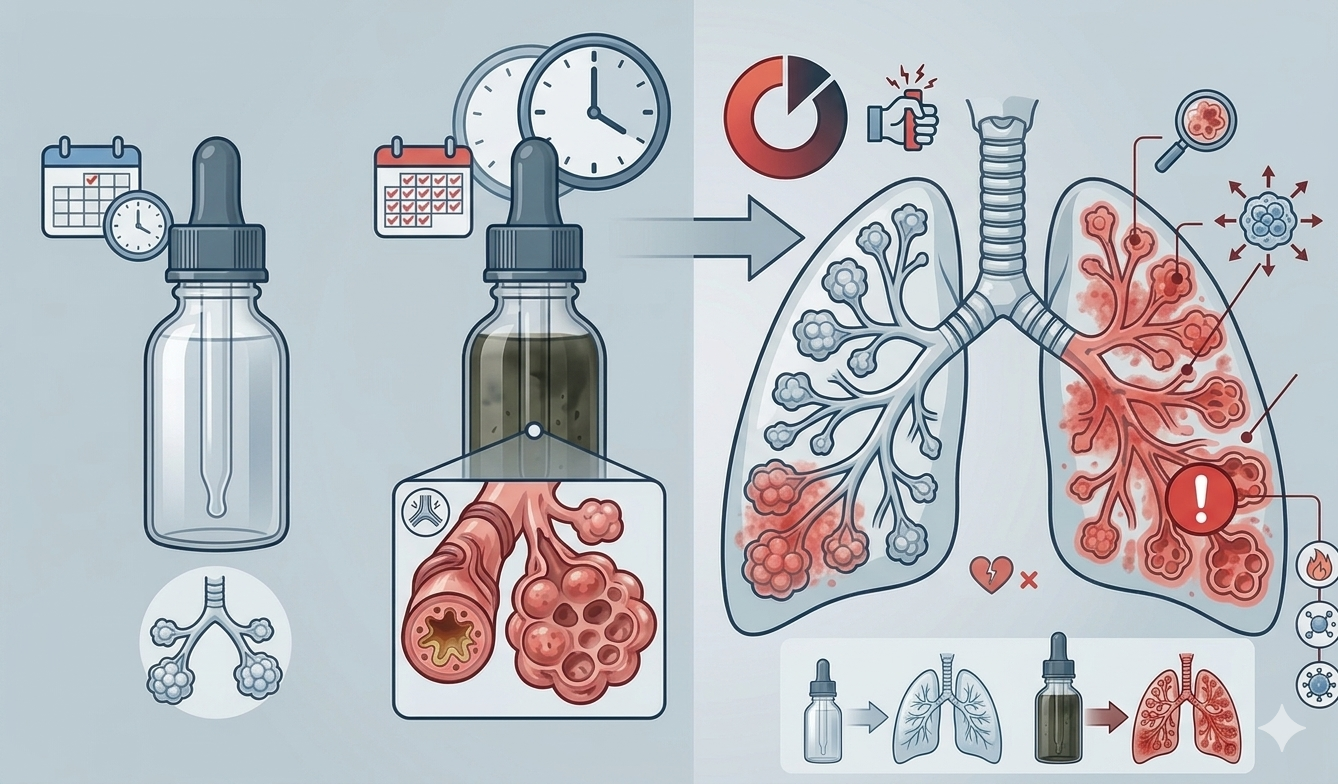
From a biological standpoint, this link makes sense. Vaping aerosols are known to promote oxidative stress, airway irritation, increased mucus production, immune activation, and persistent low grade inflammation. These are the same processes involved in the development and progression of COPD. Even if vaping delivers fewer toxins than cigarettes, repeated exposure still appears harmful to long term lung health.
Dose matters more than people think
One of the most overlooked aspects of vaping is frequency of use. A retrospective imaging study of 160 patients diagnosed with EVALI found that individuals who vaped multiple times per week or daily had significantly more severe lung injury compared to those who vaped once a week or less.
Nearly 85 percent of scans were graded as moderate to severe, and about 1.25 percent of patients died. The most common imaging pattern was organizing pneumonia, with widespread inflammatory changes seen across the lungs. Importantly, these findings were present regardless of whether the product contained nicotine, THC, or both.
This challenges the common belief that “occasional” vaping is harmless. The lungs respond to cumulative exposure, not intent. What feels like light or controlled use can still produce measurable structural damage over time.
What this means in practical terms
Vaping may reduce exposure to some combustion related toxins, but it is not biologically neutral. The lungs are not designed to repeatedly inhale heated solvents, metals, and flavoring chemicals. For people who have never smoked, vaping introduces new respiratory risks without any health benefit. For former smokers, vaping may reduce harm compared to cigarettes, but frequent or long term use still carries a real risk of chronic lung disease.
In short, vaping shifts risk rather than removing it. Smoke can be absent while damage is present.
REFERENCE:
https://www.icmr.gov.in/icmrobject/custom_data/1702965195_icmr_news_ends.pdf
https://www.nhs.uk/live-well/quit-smoking/using-e-cigarettes-to-stop-smoking/
https://linkinghub.elsevier.com/retrieve/pii/S073510979700079X
https://onlinelibrary.wiley.com/doi/10.1002/ajim.20151
https://oem.bmj.com/content/58/10/649
https://pubs.acs.org/doi/10.1021/tx200536w
https://pmc.ncbi.nlm.nih.gov/articles/PMC4623303/
https://pmc.ncbi.nlm.nih.gov/articles/PMC8224836/
https://pmc.ncbi.nlm.nih.gov/articles/PMC8578258/
https://pubmed.ncbi.nlm.nih.gov/39921069/
https://pubmed.ncbi.nlm.nih.gov/33957099/


